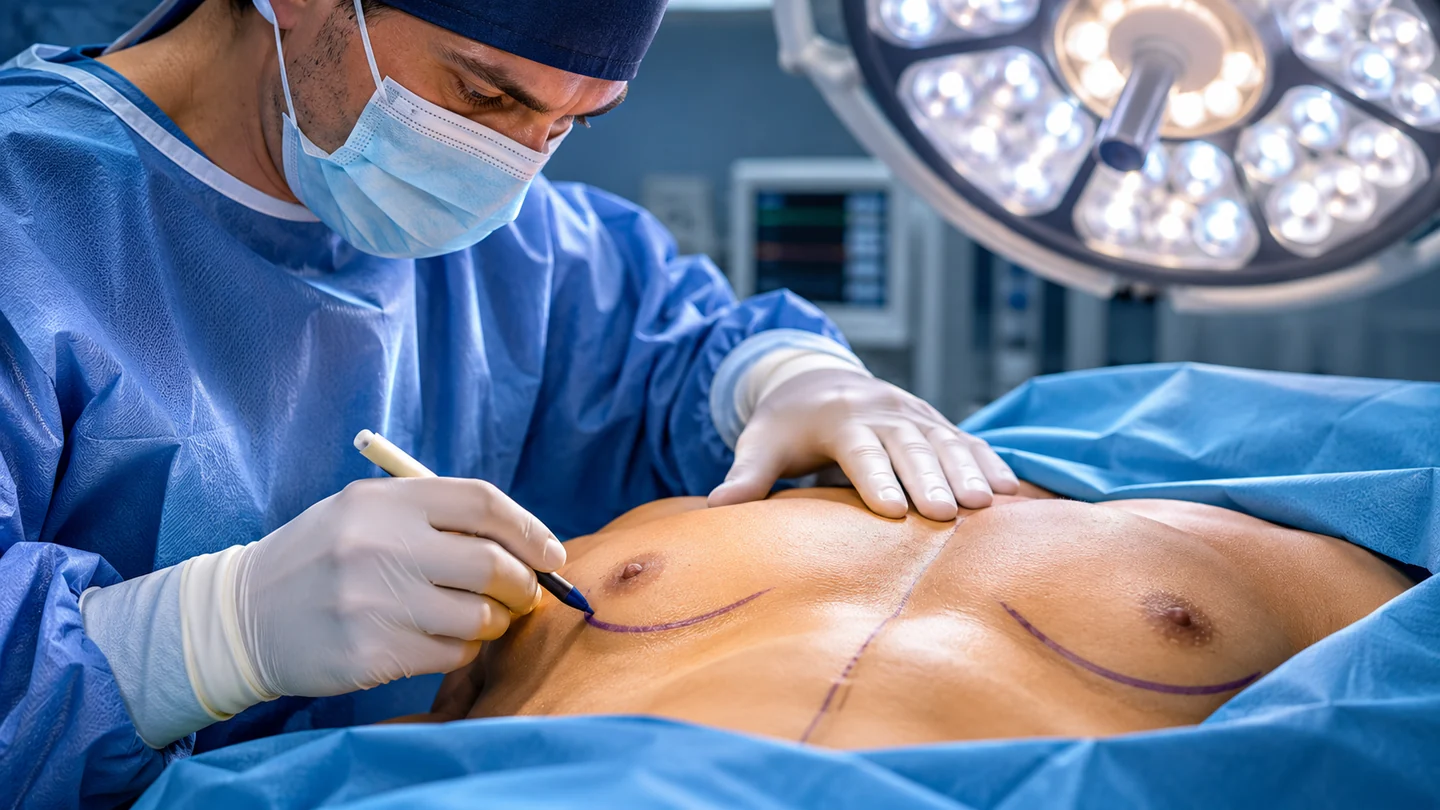
GYNECOMASTIA / MALE CHEST SURGERY
Gynecomastia Surgery
Assessment begins with understanding tissue composition and personal concerns. Surgical options are discussed based on clinical examination.
Explore the topics ↗
Assessment begins with understanding tissue composition and personal concerns. Surgical options are discussed based on clinical examination.
Explore the topics ↗Each topic has its own image and original explanation.

Gynecomastia can involve an increase in male glandular breast tissue. It may occur with or without additional fat deposition.
Learn more ↗
Examination assesses glandular tissue, fat distribution and skin quality. Additional tests may be considered when clinically indicated.
Learn more ↗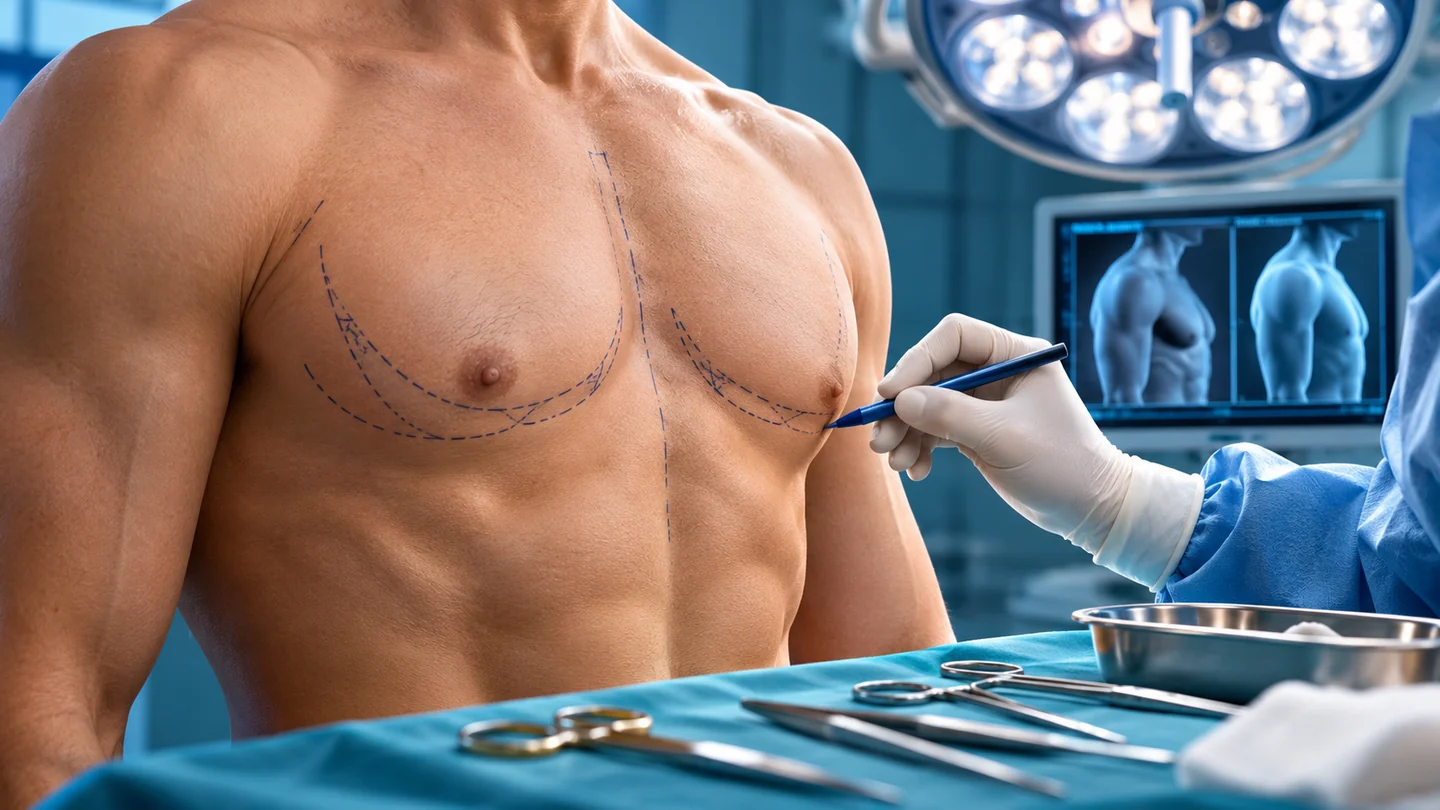
Liposuction, glandular excision or a combination may be considered. Selection depends on tissue type and skin characteristics.
Learn more ↗
Swelling, tenderness and return to activity vary between people. Follow-up helps assess progress and address concerns.
Learn more ↗
Chest contour involves more than volume: skin, symmetry and natural transitions matter. Outcomes differ with individual tissue characteristics.
Learn more ↗Results of any surgical or invasive procedure may vary between individuals. Please discuss the details with your physician before treatment.
Male chest and clinical scene illustrations are AI-generated representations, not real patient photographs or actual before-and-after surgical results.
My approach to gynecomastia surgery considers more than volume reduction. I assess glandular tissue, fat distribution, skin characteristics and chest-wall anatomy together. I discuss the limitations and potential risks before tailoring an individual plan.

Planning is based on patient safety and realistic expectations. Anatomy and healing vary from person to person.
No. Gynecomastia involves enlargement of glandular breast tissue; excess fat alone is different. Both may occur together.
No. The underlying cause, age, symptoms and examination findings must be assessed; surgery is not necessary or suitable for everyone.
All surgical procedures may leave scars. Their location and visibility vary with technique, tissue characteristics and individual healing.